Novelists

4 artists in this category

Abubakar Imam
Novelists

Abubakar Imam

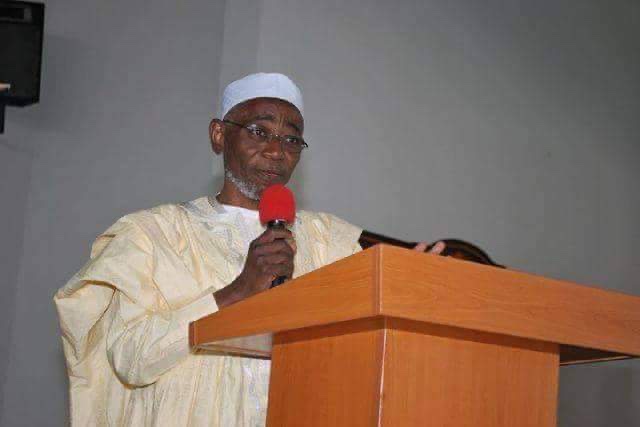
A pillar of Nigerian letters, a sharp voice in journalism, and a key figure in Nigerian politics. His journey began in the quiet town of Kagara in Minna, Niger State, where he walked through life on a very creative and intelligent path. His intellectual life began as a student at Katsina College, where curiosity first found its feet. He honed his intellectual cutting edge at the School of Education, University of London, discovering how potent a change agent he as a writer could be. A very important element is the fact that he was fluent in spoken and written words. Working at Gaskiya Ta Fi Kwabo, the first Hausa-language newspaper in Northern Nigeria, he was seen as an idea pioneer and pragmatic follower of informed dialogue. As the first Hausa-speaking editor, he provided readers with an array of viewpoints that addressed the aspirations and concerns of his people. He was an accomplished writer, and some of the successful works authored by him include 'Magana Jari Ce,' 'Ruwan Bagaja,' and 'Tarihin Annabi Kammalalle,' through which he endeavored to illuminate the audience on the culture, history, and mysteries surrounding the North Nigeria spiritual experience. The journey of Abubakar Imam was not solely on the pages of a book. Rather, it was a political and upliftment process through and within society. With individuals like Robert East, Imam was a pioneering force in building a company like the Gaskiya Corporation. A haven for those with clever thinking and a launchpad for courageous oration, Imam collaborated with others to create a major political milestone in building a part of Nigeria with individuals from the Northern People's Congress (NPC), including himself, Umaru Agaie, and Nuhu Bamalli. They created a guiding part of its administration. Abubakar Imam was a combination of intellect, ink, and influence—leaving an indelible mark in the annals of his time and remaining a permanent symbol of hope for many seeking to enrich minds, evoke hearts, and influence society as a whole. The Federal Government of Nigeria has honored his legacy by identifying Minna airport with his name, just as the Niger State Library bears his name too.

Featured
Ben Okri
Novelists

Ben Okri

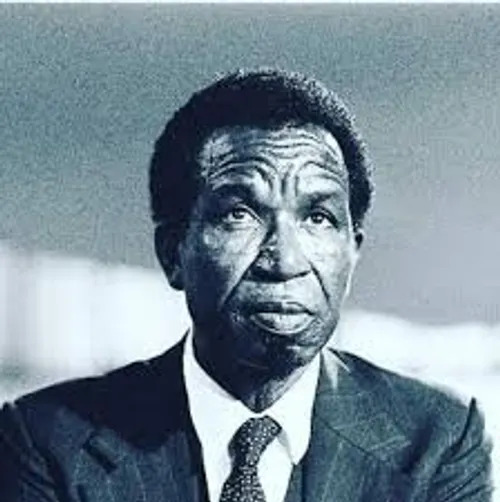
Ben Okri was born on March 15, 1959, in Minna, Nigeria. He is a Nigerian novelist, poet, and short-story writer best known for blending everyday reality with the supernatural in his work. He was educated at Urhobo College in Warri and later at the University of Essex in England. These experiences shaped his outlook and writing. His early novels, 'Flowers and Shadows' (1980) and 'The Landscapes Within' (1981), use surreal imagery to examine political unrest and corruption in Nigeria. Okri is also known for his short stories. Collections such as 'Incidents at the Shrine' (1986) and 'Stars of the New Curfew' (1988) draw heavily on Nigerian spiritual beliefs, where the physical world and the spirit world exist side by side. His most famous work, 'The Famished Road' (1991), won the Booker Prize. The novel follows Azaro, an abiku (spirit child), and explores themes of survival, identity, and social struggle. The story continues in 'Songs of Enchantment' (1993) and 'Infinite Riches' (1998), forming a trilogy that reflects life in a nation facing constant instability. Other novels by Okri include 'Astonishing the Gods' (1995), 'Dangerous Love' (1996), 'In Arcadia' (2002), 'Starbook' (2007), 'The Age of Magic' (2014), and 'The Freedom Artist' (2019). Across these works, he consistently merges the ordinary with the mythical. As a poet, Okri has published collections such as 'An African Elegy' (1992) and 'Mental Flight' (1999), focusing on endurance, disorder, and hope. His essays, including 'A Way of Being Free' (1997) and 'A Time for New Dreams' (2011), reflect on culture, freedom, and Africa's place in the world. Though not directly political, Okri's writing insists on African self-determination and imagination. His work has earned international acclaim while remaining imbibed in Nigerian experience.

Featured
Abubakar Gimba
Novelists

Abubakar Gimba

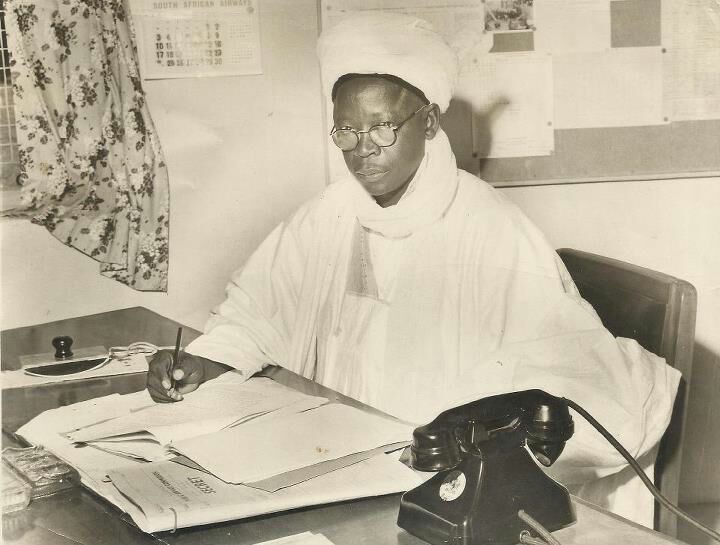
Abubakar Gimba was born in Nassarawa, Lapai Local Government Area of Niger State, and lived most of his life in Minna. He was a writer, banker, administrator, and public intellectual whose career moved easily between literature, finance, and public service. Gimba was a former National President of the Association of Nigerian Authors and an executive director in the banking sector. He played a key role in the establishment of Ibrahim Badamasi Babangida University, Lapai. His novels—'Witness to Tears,' 'Trail of Sacrifice,' 'Innocent Victims,' 'Sunset for a Mandarin,' and 'Golden Apples'—are among the most important works of modern Nigerian fiction. They focus on society, morality, power, and personal responsibility, written in clear and disciplined prose. Beyond writing, Gimba held several leadership positions. He was Chairman of the Concern Foundation and Savannah Group Ltd, combining cultural advocacy with business management. In finance, he served as Executive Director at Union Bank of Nigeria and United Bank for Africa, showing strong command of economic and institutional systems. His public service record includes serving as Permanent Secretary in the Niger State Ministry of Finance and Economic Planning. He was also Pro-Chancellor of IBB University, Lapai, Chairman of its Implementation Committee, and a former President of Ahmadu Bello University, Zaria. These roles placed him at the centre of education and policy development in Northern Nigeria. Gimba earned a Master's degree in Economics from the University of Cincinnati, USA. He travelled widely across Europe, Southeast Asia, and the Middle East, experiences that broadened his outlook and informed his writing. He participated in the International Writing Program in the United States under a State Department grant. In addition to novels, Gimba wrote short stories, poetry, essays, and newspaper columns. He was a respected public speaker and a committed humanitarian. His work consistently returned to one concern: the health of society depends on its ability to raise thoughtful, ethical, and functional human beings.
Featured